
Horses
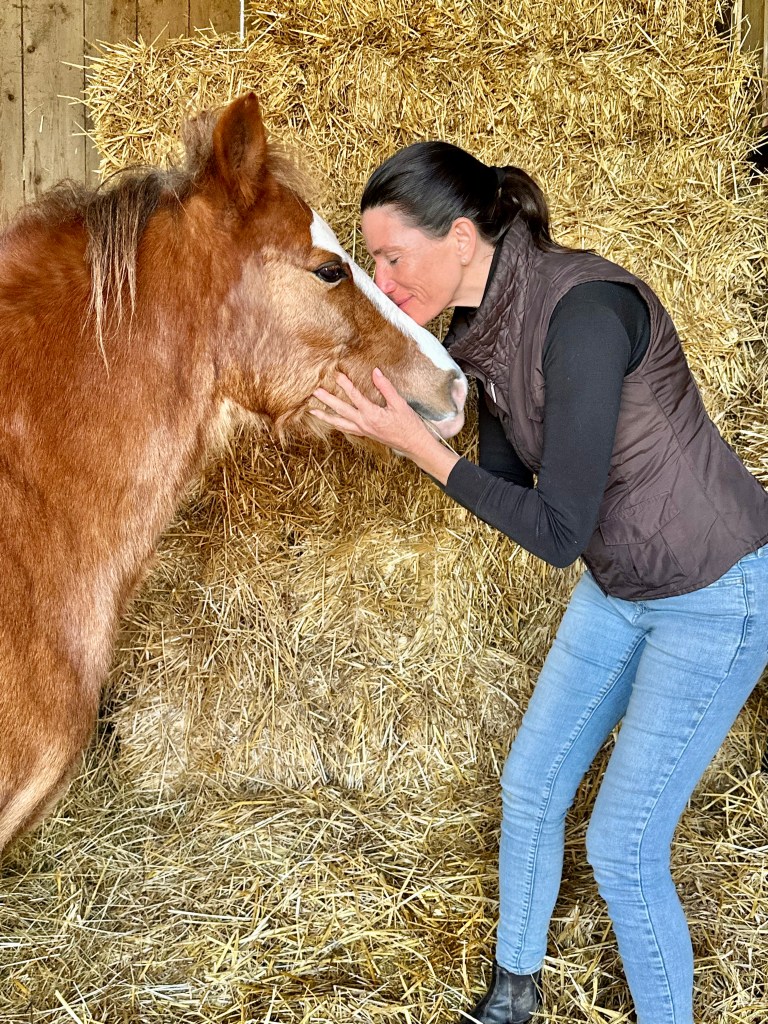
Changes in movement, behaviour or overall condition often reflect how different structures and systems interact within the body.
NickiNatur’ works with horses through two complementary approaches: osteopathic manual therapy, integrating parietal, visceral, fascial and craniosacral techniques, and systemic regulation, offering a broader understanding of how the organism functions and adapts.
Supporting soundness, performance and long-term functional balance.
The aim is to reduce discomfort, restore fluidity within the body and support its natural capacity for self-regulation.
What you may notice
Changes may appear in different ways.
- In movement and performance, this can include reduced impulsion, altered stride quality, asymmetry or a loss of fluidity and elasticity.
- Postural adaptations may develop through compensation, uneven loading or reduced engagement of specific regions.
- In training, this may present as resistance, difficulty in progression, reduced willingness to work or changes under saddle.
- Muscle development may change, with areas of loss, imbalance or reduced strength affecting overall movement quality.
- Recovery after effort may become slower, with signs of fatigue, stiffness or reduced ease of movement.
- Digestive sensitivity or recurrent disturbances may also be observed, sometimes linked to changes in condition, energy levels or overall balance.
- Internal patterns may involve digestion, skin, respiratory sensitivity or metabolic and hormonal regulation, including allergic tendencies.
- At times, it maybe simply be a sense that the horse is not moving, responding or developing as it normally would.
Situations I often work with
Horses may be presented with diagnosed conditions or more subtle changes.
Performance, movement and maintenance
– Reduced impulsion and stiffness
– Asymmetry or changes under saddle
– Difficulty in training progression or maintaining performance
Degenerative and joint conditions
– Arthrosis and progressive joint stiffness
– Reduced range of motion and mobility
– Long-term compensation patterns affecting movement
Spine, posture and back-related patterns
– Back sensitivity and restricted spinal mobility
– Kissing spines
– ECVM and structural changes
– Reduced weight-bearing capacity
Muscles, tendons and ligaments
– Muscle loss, imbalance or reduced topline development
– PSSM and muscle metabolism disorders
– Strain or overload of tendons and ligaments
Nervous system and coordination
– Ataxia and coordination disorders
– Instability, altered balance or body awareness
– Headshaking and neurological sensitivity
Digestive function
– Faecal water syndrome and recurrent digestive disturbances
– Sensitivity linked to feeding or stress
Internal and metabolic regulation
– Reduced adaptability or metabolic imbalance
– Cushing’s disease, Equine Metabolic Syndrome (EMS)
– Hormonal dysregulation affecting condition and performance
– Urogenital patterns influencing comfort and function
Immune, skin and respiratory patterns
– Allergic tendencies
– Skin reactions
– Recurrent respiratory sensitivity or COPD
– increased susceptibility to inflammatory patterns
Recovery and rehabilitation
– After injury, surgery or illness
– Reduced recovery capacity or persistent stiffness
– Rebuilding coordination, strength and movement quality
Behaviour and responsiveness
– Resistance or tension under saddle
– Altered focus, reactivity or willingness
– Behavioural changes linked to discomfort or imbalance
How I work
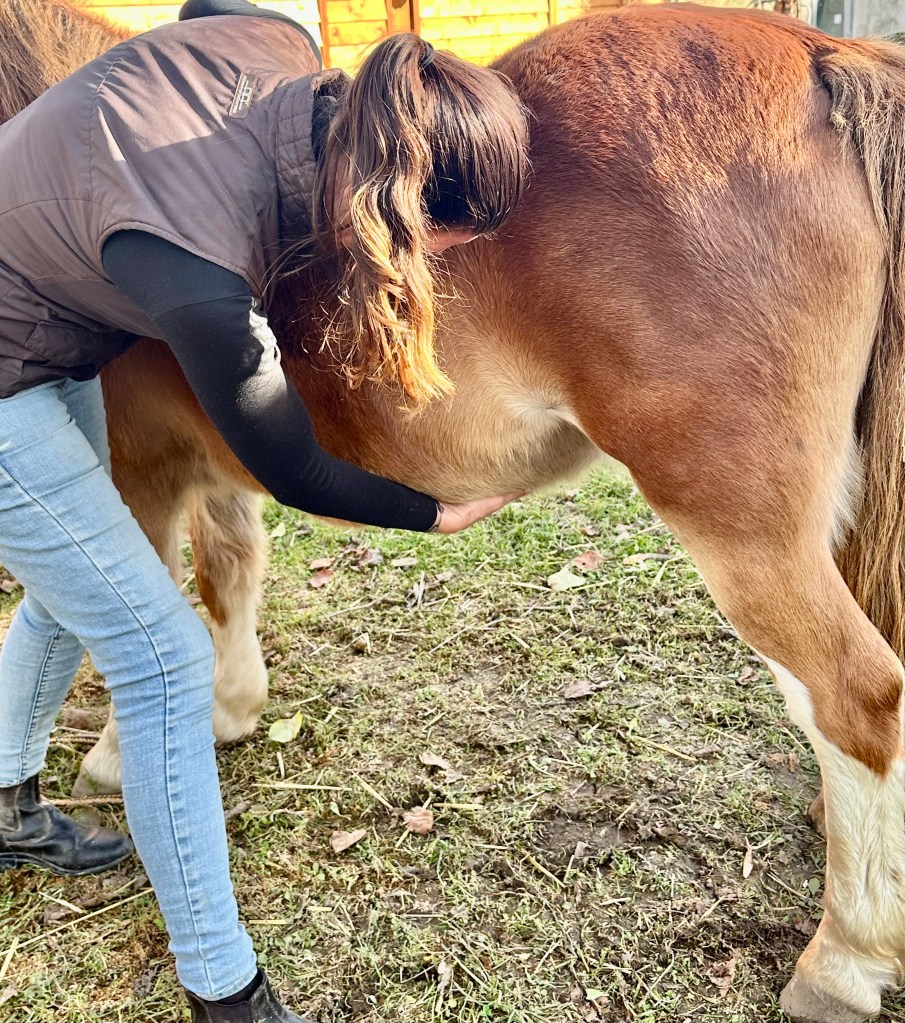
Each horse is approached through a structured method combining osteopathic manual therapy and systemic regulation.
Osteopathic manual therapy integrates parietal, visceral, fascial and craniosacral techniques within the same session, allowing a precise and adaptive response to what the horse presents.
Systemic regulation is supported through METAVITAL HORSE, bioresonance and mycotherapy, offering a broader perspective on functional and regulatory processes.
These approaches can be used independently or combined, depending on the needs of the horse and the reason for consultation.
 Physiothérapie, ostéopathie, chiropratique & naturopathie pour animaux