
Systemic Regulation
Changes in behaviour, function or overall condition may reflect how regulatory processes within the body are organised and interact.
When patterns are recurring, unclear or extend beyond structural aspects, a broader perspective allows a deeper understanding of how the organism functions and adapts.
Systemic regulation is the second pillar of my method, supporting the analysis and organisation of these processes through advanced methods such as METAVITAL.
Situations that benefit from a broader perspective
Recurring patterns
– Allergies or intolerances
– Recurrent or cyclical issues
Unclear situations
– No clear structural findings despite persistent signs
– Fluctuating or inconsistent presentations
Digestive and metabolic functions
– Sensitive digestion
– Changes in appetite or metabolic balance
Skin and tissue reactions
– Skin responses
– Changes in tissue quality or sensitivity
Hormonal and regulatory balance
– Fluctuating overall condition
– Patterns linked to hormonal regulation
Nervous system and coordination
– Altered coordination or reactivity
– Changes in responsiveness or stability
Cellular regulation and vitality
– Reduced vitality
– Slow or irregular adaptation
Preventive insight
– Early recognition of emerging patterns
METAVITAL
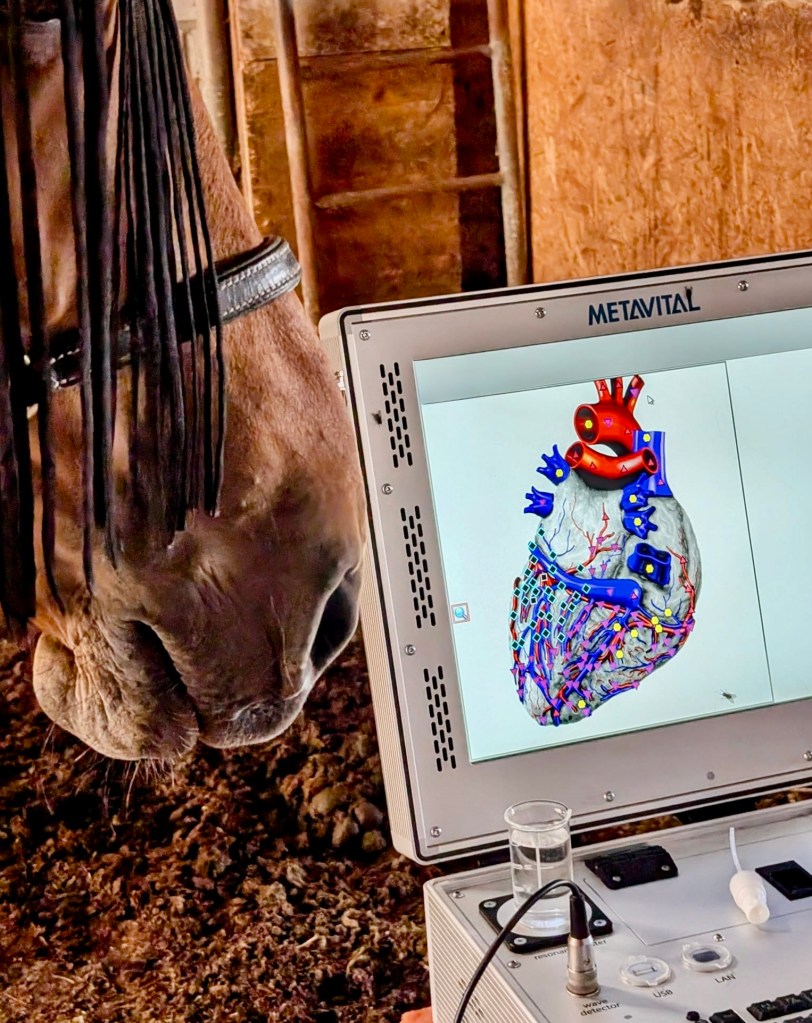
METAVITAL is an advanced system for analysing and supporting regulatory processes within the organism.
Its strength lies in making the coherence of biological systems visible, from organ interactions down to cellular and molecular levels.
This allows patterns to be observed across metabolic, hormonal, nervous and cellular processes, often before they become clearly expressed at a structural level.
Scan
A non-invasive scan captures biophoton and electromagnetic signals from the organism.
These signals are analysed through non-linear system (NLS) modelling and compared with reference patterns to identify functional imbalances and regulatory dynamics.
Visualisation
The analysed data is reconstructed into a structured model of the organism, showing relationships between systems, their capacity for self-regulation and areas of functional stress.
This model reflects interactions across different levels, from organ function to cellular organisation and overall system dynamics.
Regulation
Targeted informational impulses are applied using biophotons s a natural medium of cellular communication.
These impulses interact with regulatory processes, supporting the organism in reorganising and stabilising its functional dynamics.
Classical Bioresonance
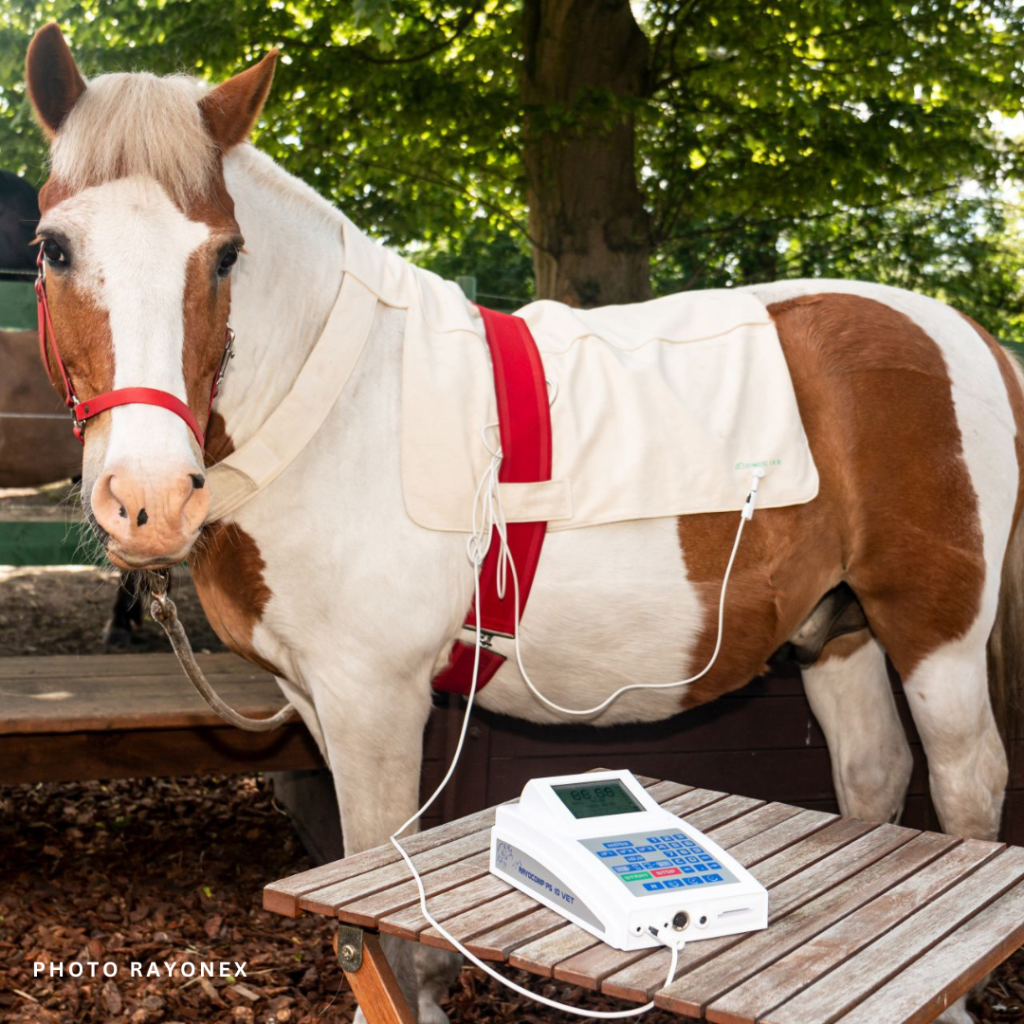
Classical bioresonance is a non-invasive method working with frequency patterns within the organism.
Different tissues, organs and systems express characteristic frequency patterns.
Variations in these patterns may reflect functional imbalance.
Specific frequency spectra are applied in a targeted and controlled manner to support regulatory processes.
I work with the Rayonex Vet system, using calibrated frequency sequences adapted to the individual situation.
Mycotherapy

Mycotherapy uses selected medicinal mushrooms to support regulatory processes within the organism.
Mushrooms contain bioactive compounds such as polysaccharides, triterpenes, amino acids and trace elements, traditionally used to support metabolic, immune and adaptive functions.
Functional Role
Depending on the individual situation, medicinal mushrooms may support:
– Immune modulation
– Detoxification
– Digestive function
– Metabolic balance
– Nervous system regulation
– Adaptation to stress

I provide guidance on the individual selection and practical application of medicinal mushrooms.
Systemic regulation can be used as a primary approach or combined with integrative manual therapy, depending on the needs of the animal and the reason for consultation.
 Physiothérapie, ostéopathie, chiropratique & naturopathie pour animaux